

The Journey of Your Blood Sample, Step by Step
When a phlebotomist draws your blood, it sets off a detailed, tightly controlled process before you ever see a report. Understanding this journey demystifies exactly what’s happening behind the scenes at Biocity Healthcare’s pathology lab.
1. Collection
A trained phlebotomist draws blood using a sterile needle, collecting it into color-coded tubes — each containing specific additives (like anticoagulants) suited to the tests ordered.
2. Labeling and Documentation
Every sample is immediately labeled with identifying details and matched to a requisition form listing the exact tests requested — a critical step for avoiding mix-ups.
3. Transportation to the Lab
Samples travel to the lab under controlled conditions. For temperature-sensitive tests, insulated, temperature-monitored kits preserve sample integrity throughout transit.
4. Receiving and Sorting
On arrival, each sample is checked for correct labeling and signs of contamination, then entered into the lab’s tracking system with a unique ID for traceability from this point forward.
5. Preparation
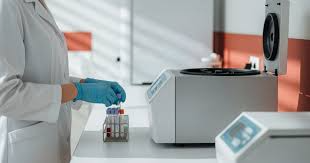
Many tests require centrifugation to separate plasma or serum from blood cells. Portions may then be aliquoted into smaller containers for specific tests while preserving the original sample.
6. Testing
Routine tests run through automated analyzers capable of processing multiple samples with high precision. More specialized tests — like cultures or molecular diagnostics — are handled manually or with dedicated PCR equipment by trained technicians.
7. Quality Control
Throughout testing, control samples run alongside patient samples to verify accuracy, and equipment is regularly calibrated to maintain consistent performance.
8. Result Interpretation
Pathologists and lab scientists review results for abnormalities or patterns. Complex or unexpected findings may prompt consultation with specialists or additional confirmatory tests.
9. Reporting
Final results are shared digitally — via app, email, or WhatsApp for most home-collection patients — usually within 24 hours, giving you and your doctor fast access to critical information.
10. Follow-Up
Once you or your doctor receive results, the next step — whether that’s reassurance, further testing, or treatment — depends entirely on what the report shows.
Frequently Asked Questions
Most routine panels are completed and reported within 24 hours of sample collection.
Damaged or hemolyzed samples are flagged during intake, and a fresh sample collection is arranged rather than risking an inaccurate result.
Yes — Biocity Healthcare uses barcode tracking from the point of pickup through lab processing.
Book Your Test with Biocity Healthcare
Trust your sample to a process built for accuracy at every step — from your doorstep to your digital report.