

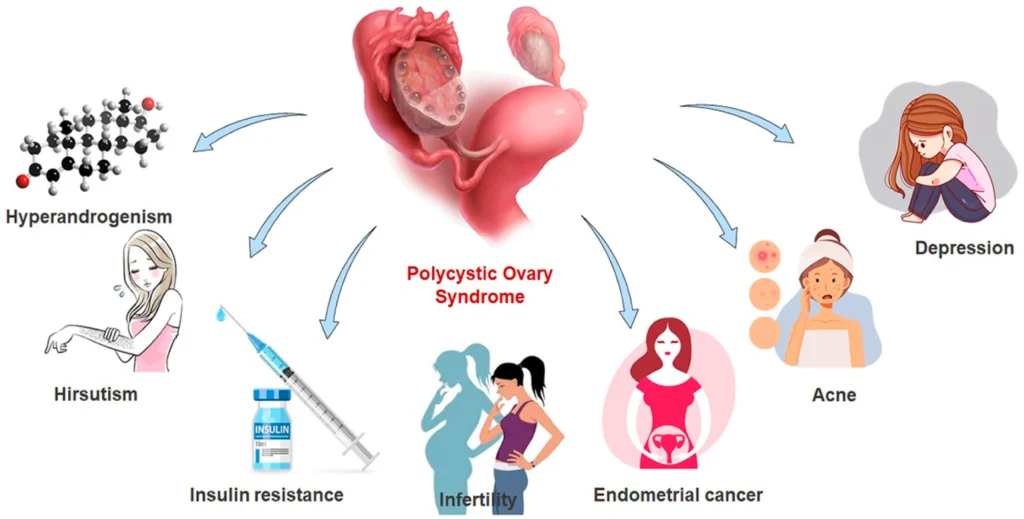
Understanding PCOS: A Complex, Common Condition
Polycystic Ovary Syndrome (PCOS) is a hormonal disorder affecting people with ovaries, primarily during reproductive years, and is one of the most common causes of infertility. Because it presents differently from person to person — some with irregular cycles, others with weight changes, acne, or fertility struggles — diagnosis relies on a combination of clinical evaluation and targeted testing, not a single test alone.
The Diagnostic Criteria
Most PCOS diagnoses use the Rotterdam criteria, requiring at least two of three features: irregular or absent ovulation, clinical or biochemical signs of excess androgens, and polycystic ovaries visible on ultrasound. This is why testing typically combines blood work with imaging rather than relying on either alone.
Core Blood Tests Used in PCOS Diagnosis
Hormone Panel: LH, FSH, total and free testosterone, and prolactin help identify the hormonal imbalance pattern typical of PCOS, including an elevated LH:FSH ratio.
Insulin and Glucose Testing: Insulin resistance is present in a large proportion of PCOS cases. Fasting glucose, fasting insulin, and HbA1c help assess this and guide management.
Lipid Profile: PCOS is linked to higher cardiovascular risk, making cholesterol and triglyceride monitoring a standard part of the workup.
Thyroid Function Test (TSH): Thyroid disorders can mimic or coexist with PCOS symptoms and need to be ruled out or identified.
AMH (Anti-Müllerian Hormone): Increasingly used as a supportive marker, since AMH levels often correlate with the number of small ovarian follicles seen in PCOS.
Imaging: Pelvic Ultrasound
A transvaginal or pelvic ultrasound checks for the characteristic appearance of multiple small follicles on the ovaries. It’s a key diagnostic tool, but findings are interpreted alongside — not instead of — blood work and symptoms.
Ongoing Testing for Management, Not Just Diagnosis
PCOS testing doesn’t stop at diagnosis. Regular monitoring of blood sugar, insulin resistance markers, and lipid profile helps track long-term risk and adjust treatment — whether that’s lifestyle changes, medication, or a combination.
Frequently Asked Questions
Not always — diagnosis requires meeting at least two of three Rotterdam criteria, so a strong hormonal and symptom pattern can sometimes be sufficient without ultrasound confirmation.
Insulin resistance is common in PCOS and contributes to symptoms, so identifying it helps guide both treatment and long-term diabetes risk management.
Typically annually for metabolic markers like glucose and lipids, though your doctor may recommend more frequent monitoring based on symptoms and treatment response.
Book PCOS Diagnostic Tests with Biocity Healthcare
Get your hormone panel, thyroid test, and metabolic markers checked from home — accurate and accredited.