


Pregnancy changes a lot of things in a woman’s body and not all of it is visible from outside. Some things you can see, like the belly growing or the constant tiredness everyone talks about. But there are changes happening inside too, and the thyroid gland is one part that most people don’t think about until a doctor brings it up. This gland sits in the neck and it controls how the body uses energy. During pregnancy it does something extra important too, it helps in the baby’s brain growth, especially in the beginning months.
That is exactly why thyroid testing in pregnancy is something doctors keep insisting on now. It’s just a blood test, nothing complicated, but it tells whether the thyroid gland is doing its job properly or not. And if there is some issue, catching it on time makes a big difference, for the mother and for the baby both.
This blog covers why thyroid test during pregnancy is important, when it should be done, what a normal TSH number looks like, and what happens when the levels go too high or too low.
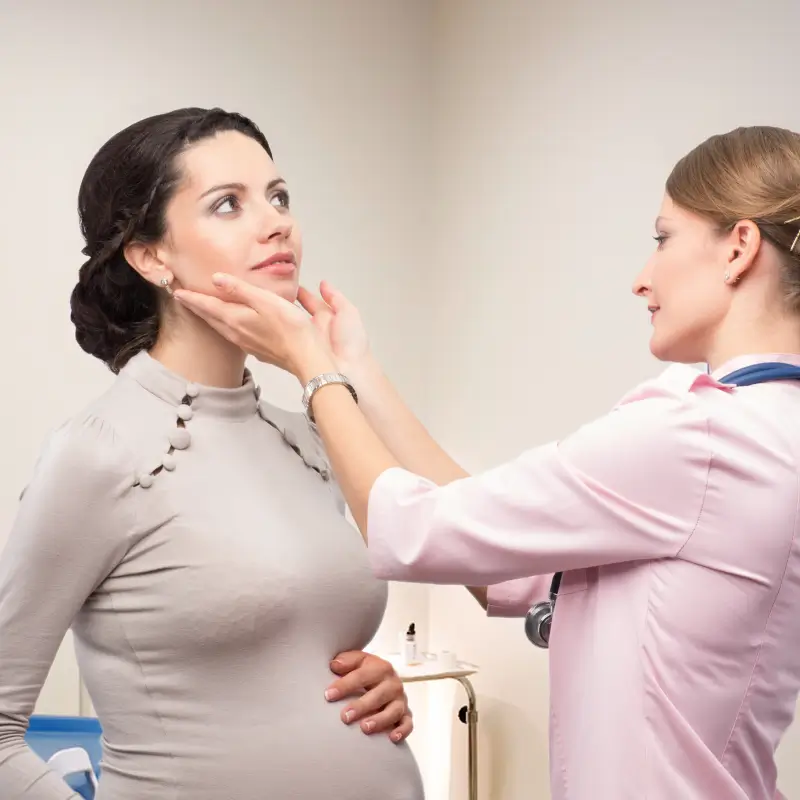
Why Thyroid Health Matters During Pregnancy
The thyroid gland makes hormones and these hormones control metabolism, basically how your body runs. During pregnancy the body needs more of these hormones because the baby is growing and depends on them. In the first trimester actually, the baby is completely dependent on the mother’s thyroid hormones since its own thyroid hasn’t even developed yet. That’s a big responsibility for one small gland.
If the thyroid isn’t working the way it should, it can cause real problems, not small ones. Miscarriage risk goes up, there’s a chance of early delivery, and the baby’s brain development can get affected too. This is why doctors recommend a pregnancy thyroid test even for women who feel completely fine and have no complaints at all.
A lot of women don’t even realise something is wrong because the symptoms look just like normal pregnancy stuff. Feeling tired, mood going up and down, weight changing, it all overlaps. So relying on how you feel is not enough, which is basically the whole reason thyroid screening in pregnancy exists in the first place.
Is Thyroid Testing Necessary During Pregnancy?
Yes, it is, and most doctors treat it as a routine part of the checkups now, not something extra. Even women who never had thyroid trouble before can suddenly develop it once pregnant, because pregnancy hormones mess with the thyroid gland directly.
Usually doctors will ask for this test if there’s a family history of thyroid issues, or the woman already has a thyroid condition, or there were complications in a past pregnancy, or symptoms like extreme tiredness and sudden weight changes show up. But honestly, a lot of clinics now just recommend pregnancy thyroid screening for every pregnant woman, just to be on the safe side. It’s cheap, it’s quick, there’s no real downside to doing it.
When Should Thyroid Tests Be Done in Pregnancy?
This is probably the question doctors get asked the most. If you’re wondering when should thyroid test be done during pregnancy, the simplest answer is, as early as possible. A thyroid test in first trimester is ideal, within the first few weeks of finding out you’re pregnant, not after.
Timing matters here more than people realise. Since the baby depends completely on the mother’s thyroid hormones early on, if a woman has an undiagnosed thyroid problem and the test gets delayed, that early window where treatment would have helped the baby’s brain the most, gets missed.
Even if the first report looks fine, doctors often still want to recheck thyroid levels in pregnancy again in the second and third trimester, especially if there’s any risk factor involved, or if new symptoms show up along the way.
What Is the Normal TSH Level During Pregnancy?
A TSH test during pregnancy checks the thyroid stimulating hormone. Basically this is the hormone the brain sends out to tell the thyroid how much work it needs to do. This number shifts a bit during pregnancy compared to when you’re not pregnant, and that’s completely normal, nothing to panic about.
Normal TSH levels during pregnancy are usually lower than the regular non-pregnant range, and it changes slightly with each trimester too. Roughly, most labs go by something like this.
Trimester Normal TSH Range (mIU/L) First Trimester 0.1 to 2.5 Second Trimester 0.2 to 3.0 Third Trimester 0.3 to 3.0
These numbers can be a little different from lab to lab, so it’s better to just ask your own doctor to explain the report instead of matching it against something you found on Google. A thyroid function test pregnancy report really needs to be looked at along with your symptoms and history, the number alone doesn’t tell the full story.
Can Thyroid Affect Pregnancy?
Yes, it can, in more than one way actually. Low thyroid function (hypothyroidism) and high thyroid function (hyperthyroidism), both can cause trouble if left untreated.
With low thyroid levels, there’s a higher chance of miscarriage, anemia, high blood pressure during the pregnancy, and delays in the baby’s development. With high thyroid levels during pregnancy on the other hand, the risks are more like preterm birth, low birth weight, and sometimes, though rare, heart complications in the mother.
The good part is, most thyroid problems in pregnancy are very treatable once someone catches them. Usually just one tablet a day is enough to keep the hormone levels steady and let the pregnancy go smoothly.
What Does a Thyroid Blood Test During Pregnancy Involve?
Nothing scary here. A thyroid blood test during pregnancy is just a small blood draw, usually from the arm, sent off to a lab. No fasting needed unless it’s combined with some other test that requires it.
What gets checked, mainly:
TSH (Thyroid Stimulating Hormone) Free T3 and Free T4 Thyroid antibodies sometimes, especially if there’s a family history of thyroid disease
Results usually come back in a day or two and then the doctor sits with you and explains what it actually means for your pregnancy.
Tips for a Smooth Thyroid Testing Experience
A few small things help make this whole process less of a hassle.
Tell your doctor upfront if there’s any thyroid history in the family. Don’t skip mentioning symptoms even if they feel too minor to talk about. Keep copies of every report, it helps the doctor track changes across trimesters properly. And if anything on the report doesn’t make sense, just ask, thyroid numbers can be confusing without context.
A lot of women these days go for home sample collection to check their thyroid levels in pregnancy, mainly because it saves the back and forth to a lab, which is a big deal when you’re already running low on energy.
Conclusion
Thyroid health ends up mattering a lot more in pregnancy than most women expect going in. One simple test, done early, can catch a problem before it turns into something bigger, and treating it is usually not complicated once it’s found. First pregnancy or third, it doesn’t matter, don’t skip the thyroid screening in pregnancy. It’s a small step but it’s really protecting two people at once.
And if getting to a lab feels like one more thing on an already long list, home based thyroid testing is worth looking into, it just makes staying on top of this one less thing to stress about.
What Tests Are Included?
A complete body checkup for women typically covers:
- Complete Blood Count (CBC)
- Blood sugar (fasting/random)
- Lipid profile
- Liver function test
- Kidney function test
- Thyroid profile
- Vitamin D and Vitamin B12
- Iron studies
- Urine analysis
- Inflammatory markers, where clinically relevant
For women dealing with irregular cycles, unexplained acne, excess facial hair, or fertility concerns, a hormone test for women – covering estrogen, progesterone, FSH, LH, and prolactin, adds a layer most standard packages skip. A dedicated PCOS hormone test is often recommended alongside this, since PCOS symptoms overlap with several other conditions and a broader hormone panel helps rule things in or out.
Benefits of Women’s Health Checkup at Home
No traffic to a lab. No waiting room. No taking half a day off work just to sit for a blood draw. That’s the practical case for home testing, and for working professionals, new mothers, and elderly women especially, it’s often the difference between getting tested and putting it off indefinitely.
It’s not a lesser version of lab testing, either. Accredited labs process home-collected samples under the exact same quality protocols they’d use in-clinic, and reports come back digital – easy to store, easy to share with your doctor, easy to compare against last year’s numbers when you’re tracking something over time.
Choosing the Right Women’s Health Screening Package
There’s no single “right” women’s wellness package, the right one depends on your age, family history, symptoms, and how much you already know is worth watching. A good health checkup package for women should cover the core blood work as a baseline, with hormone testing layered in only when it’s actually indicated.
Age-wise recommendations:
- 20–30 years: CBC, blood sugar, iron studies, vitamin D, thyroid profile
- 30–40 years: Add lipid profile, liver and kidney function, hormone testing if your doctor advises it
- 40 and above: Annual comprehensive screening, heart health markers, diabetes monitoring, and bone health assessment, as recommended by your physician
Preparing for Your Home Blood Test
A few small things make a real difference in accuracy. Follow the fasting window if your package requires it (usually 8–10 hours, water is fine). Stay hydrated the day before, dehydration can skew several markers. Tell the technician about any medications or supplements you’re on. And if fasting tests are involved, book a morning slot; it’s simply easier on your body and your schedule. Loose sleeves help too, sounds minor, but it makes the actual draw quicker and less uncomfortable.
Affordable Women’s Health Checkup at Home
Think of an affordable health checkup for women at home less as an expense and more as insurance against a much bigger bill down the line. Catching a thyroid disorder, borderline diabetes, or a vitamin deficiency early usually means a simple fix, a supplement, a medication adjustment, a diet change. Catching it late can mean years of complications that are harder, and far more expensive, to reverse.
Bundled women’s preventive health packages at home also tend to work out cheaper than booking each test separately, since labs price panels as a group rather than line by line.
Availability Across NCR
If you’re searching for the best women’s health checkup at home in India, the NCR region has no shortage of trusted diagnostic providers offering doorstep collection and same-day digital reports. You can book a women’s health checkup at home in Delhi, a thyroid test at home in Gurgaon, or a hormone test at home in Noida, all with the same accredited-lab quality you’d get walking into a diagnostic centre, minus the commute. Female health tests at home are increasingly the default choice across these cities simply because they fit into how people actually live and work now.
Conclusion
You give your attention to everyone else’s health first. This is one place where it’s worth reversing that order: a single screening can surface something that’s been quietly building for months, while it’s still easy to treat.
At BioCity Healthcare, we handle the logistics so you don’t have to: doorstep sample collection, accredited lab processing, and women’s wellness packages built around real-life schedules, not lab hours. Whether you need a female health package, a thyroid profile test, a hormone test for women, or a full body checkup for women at home, our team is set up to make reliable diagnostics feel less like a chore.
Book your women’s health checkup at home today, it’s a small step now that tends to save you a much bigger one later.
Frequently Asked Questions
Yes. The baby’s brain development depends on the mother’s thyroid hormones early on, so this test really isn’t something to skip.
It shifts a bit by trimester but generally sits somewhere between 0.1 and 3.0 mIU/L. Your own doctor will confirm the exact range your lab uses though.
As early as possible, ideally in the first trimester, with a recheck later on if needed.
Yes, both low and high thyroid levels can affect the pregnancy and the baby. Most cases though are manageable with the right treatment.
Yes. Every collection follows sterile-equipment protocols and standard safety practices, identical to what you’d see in a clinical lab setting.